How Do I Keep Game Night Fun When Some People Only Care About Football?
You invite friends over for board games, and half the group arrives asking what time kickoff is. That’s not a failed game night. It’s a hosting puzzle—and football can actually make the evening easier to plan if you stop treating it like the competition.
I’ve hosted Thanksgiving-week gatherings, Super Bowl watch parties, and monthly board game nights long enough to learn that people don’t need to share one idea of fun. They need a comfortable room, a few clear expectations, and more than one way to join in. The football fans can follow the game. The players can get a board going. And the people who like both can drift between them without disrupting either.
My favorite setup is a split table: one area for watching and snacking, another for games. Put both in the same room, agree on the volume, and choose games that fit the actual rhythm of the night. Add coasters at every seat, a cooler by the back door, and a hard stop time before the first beer is opened. Now you’re hosting, not refereeing.
Make One Room the Whole Party
If you want to keep the evening fun—and protect the rest of your house—make one room the home base. The fewer people wandering around with open drinks, the fewer chances you have of discovering a beer on the piano or greasy fingerprints on a door handle. I learned early that “just grab something from the kitchen” can turn into a parade through the house.
Choose a room with enough seating for the football fans and enough table space for a game. If the room is tight, get creative: arrange chairs toward the television, then use a dining table, side table, or sturdy folding table for play. Keep snacks and drinks in that same zone so nobody has to cross the house with a plate balanced over game components.
A dedicated game dining table can help make that arrangement feel natural. The Dresden, for example, is a board game dining table, and thinking about furniture designed to serve both dinner and games can spark good layout ideas—even if your own setup is a regular dining table and a stack of coasters. You don’t need special furniture; you need a plan for where each activity happens.
Set the room up before guests arrive
- Give each activity a home. Point the main seating toward the television and keep the game surface nearby, but not in the path to snacks.
- Keep the rest of the house out of the traffic flow. Close doors to rooms you don’t want people using, and put coats and bags in one agreed spot.
- Put a coaster at every seat. Not in a basket across the room. At every seat. It’s a tiny bit of table-setting that saves a lot of explaining later.
- Use painter’s tape for quick labels. I label bins for clean cups, napkins, and game components so guests can find what they need without asking—or searching through a closet.
- Park the cooler by the back door. It’s an easy, visible drinks station that keeps refills out of the kitchen and reduces people wandering through the house.
One-room hosting isn’t about making guests feel penned in. It’s about making the easy choice the right choice. When everything people need is in one place, they can pay attention to the game, the game night, or both.
Let Football Be the Built-In Schedule
One of the best things about hosting during football is that the evening already has a rhythm. Kickoff, breaks, halftime, and the final whistle give you natural moments to start, pause, or wrap up a game. You don’t have to force everyone into one continuous activity or compete with the television from the first minute to the last.
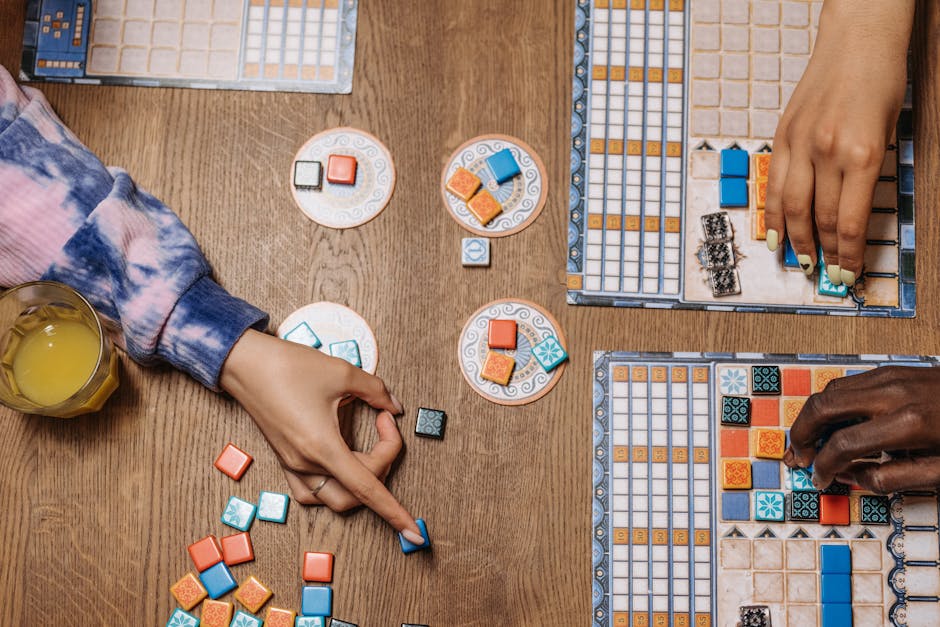
Instead, treat football as a built-in schedule. Start with casual conversation and snacks before kickoff. Play a short game during a quieter stretch or a commercial break. Use halftime for a longer round, a food refill, or a quick reset. If the game gets close near the end, keep the board game paused and let fans watch. That pause is not a failure; it’s a feature of the evening.
Make commercial break games easy to start
Commercial break games are short, low-commitment activities that work when people have a few minutes but don’t want to miss the next play. Think quick party games, word games, simple card games, or a small dexterity challenge—not a sprawling strategy game that needs an hour of uninterrupted attention.
Keep one or two options ready, already opened and explained. If players have to hunt for pieces, read a long rulebook, or set up a complicated board while the broadcast is on, you’ll lose the room before the first turn. A small game on a side table is often perfect. It can be picked up, put down, and resumed without turning every timeout into a production.
For a longer game, look for a clear window. Some groups are happy to play through most of the broadcast and glance up for big moments. Others want the board fully paused whenever something exciting happens. Ask before choosing, then pick a game whose length and attention demands fit the answer.
Part of the evening Good fit Host’s move Before kickoff A medium-length game or a relaxed teach Start only if the group is ready; don’t rush arrivals During play A game that can pause between rounds Agree on when to stop and look up Commercial breaks Quick party, word, or card games Keep setup short and pieces contained Halftime A longer round, food break, or game reset Give guests a choice rather than announcing an activity After the final whistle A full game for people who still have energy Respect the hard stop you set at the startChoose Games for the Group You Have
It’s tempting to pick the game you’re excited to teach. Resist that temptation if half the room is watching football and the other half has never played. The right choice depends on time, attention, experience, and how much friendly competition your group enjoys.
For a mixed group, prioritize games with short turns, simple rules, and room for people to join the conversation. If your football fans are interested but don’t want to miss the game, offer a role that doesn’t require constant attention—or let them watch without pressuring them to play. Participation should feel like an invitation, not a loyalty test.
Use a simple selection checklist
- How long does a round take? A 15-minute game is easier to fit around a broadcast than a game that routinely runs an hour.
- Can it pause cleanly? If a big play comes up, can everyone stop without losing track of whose turn it is?
- How much table space does it need? Leave enough room for the board, drinks, and players’ elbows—without giving the game a spill zone.
- Can newcomers learn by playing? A short explanation and a practice turn are often better than a rules lecture.
- Does the game tolerate spectators? Some games are fun to watch; others become confusing when people drift in and out.
Put out a small menu rather than an entire shelf. I keep game boxes off the floor and away from the main traffic route; a pile of boxes is neither a welcoming display nor a safe place to step. Choose two or three options, label the holding bin with painter’s tape if needed, and explain the choices in one sentence each. Guests can make a decision without feeling like they’ve joined a game convention.
Agree on a Volume Agreement
Football and board games can share a room, but sound is where good intentions often break down. The television gets turned up for a big moment. Someone across the table asks a rules question. A second person repeats it louder. Soon nobody can hear anything, and the game feels like homework.
Before the first beer is opened, make a simple volume agreement. It doesn’t need to be formal or fussy. You might say: “Let’s keep the TV at a level where the table can still talk. If the game gets exciting, we’ll pause the board and enjoy it.” That gives football fans permission to react and players permission to hear one another.
Where possible, use captions. Arrange seating so the television is visible without needing to be loud, and keep the game table close enough that players don’t feel separated from the action. If the broadcast volume and conversation still clash, pause the https://highstylife.com/how-do-i-host-a-holiday-game-night-without-trashing-the-whole-house/ game during important plays instead of trying to shout over them.
As a host, I’d rather pause a round than repeat the rules six times. People remember a considerate evening more fondly than a game that technically finished on schedule.
Set Up Beer and Snacks to Avoid Spills
Beer, cards, and game boards can coexist, but they need a little breathing room. The goal is not to make guests nervous about holding a drink. It’s to give drinks a predictable place so the board doesn’t become the nearest flat surface.
- Put coasters at every seat. Make them obvious and reachable. A stack near the snacks is less useful once people have sat down.
- Use a cooler by the back door. Keep cans and bottled drinks there, along with a small bin for empties. Guests can grab a refill without crossing the game table.
- Keep drinks off the board. Set a side table or a clearly designated drink edge near players, but outside the area where pieces move.
- Choose low-mess snacks. Bowls of pretzels, popcorn, or other easy-to-grab food are kinder to cards than saucy wings or greasy chips. Serve messy food away from the game surface.
- Make napkins easy to find. A visible stack is better than a frantic search when someone spills.
- Use a separate discard spot. A small bin near the cooler keeps empty cans from collecting beside the cards.
It also helps to say the quiet part out loud: “Please keep drinks on the coasters and away from the board.” That’s not uptight. It’s how the game remains playable for the next person, too. And if somebody needs to refill, ask them to wait https://bizzmarkblog.com/how-do-i-keep-people-from-leaning-across-the-board-to-grab-snacks/ until the current turn is done rather than reaching over the board.
Make the Invitation Easy—and the Evening Flexible
When you invite people, tell them what kind of night it is. “Football on, games available, come and go between the two” sets a different expectation than “board game night,” even if both describe the same room. Guests can decide how they want to participate before they arrive.

If you use an online RSVP form, keep it straightforward and ask only what you need, such as headcount or food preferences. Cloudflare Turnstile is a tool site owners may use as part of their bot-protection setup; it’s worth keeping any RSVP process simple and accessible for actual guests, rather than making a casual invitation feel like an obstacle course. The event itself should be easier to join than a complicated campaign to get everyone to play.
Once guests arrive, offer choices without keeping score of who takes them. Some people will play. Some will watch. Some will do both. A person who asks about a game, takes one turn, then returns to the television still counts as having had a good night. Let people drift naturally, as long as they’re not spilling into other rooms or over the board.
Set the Stop Time Before the First Beer
There’s one hosting habit I recommend every time: decide when the gathering ends before the first beer is opened. I tell guests the hard stop in the invitation or at the door. That helps everyone plan a ride, decide whether to start another game, and avoid the awkward “Are we still going?” conversation late in the evening.
Near the stop time, don’t start a game that can’t finish. Offer a final commercial break game, invite people to watch the last stretch, or begin putting away components once the current round ends. I label bins with painter’s tape so cleanup is easy and the right pieces go back in the right place. No box pile on the floor, no wandering cups, no mystery card under the couch.
The secret to hosting a split table is not convincing every guest to love every activity. It’s making room for different kinds of fun without letting the logistics take over. Keep everyone in one room, let football provide the evening’s natural pauses, choose games that match the group, and make the beer setup spill-resistant. Set a volume agreement, put coasters at every seat, and keep the cooler by the back door.
Then enjoy your own party. The best game night isn’t the one where everybody plays the same thing. It’s the one where the football fans get their game, the board gamers get a good round, and nobody has to fish a playing card out of a beer puddle.